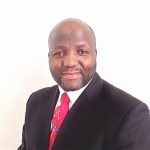
Morena Sebobane II
[metadata element=”date,author,comments,sticky,views” ]
About Morena Sebobane (Nkokoto II)
Professional and Royal Profile: Morena Sebobane of Sechaba sa Bahlakoana ba Nkokoto (Thabatshotsho, Ha Nkokoto) is a distinguished leader, cultural advocate, and head of the Morake Royal House Assembly. A 6th-generation descendant of Morena Sebobane I of Makgolokwe-a-Mafehleng and Kgosatsa Nkaledi of Bahlakoana ba Nkokoto, he carries the legacy of the Bahlakoana ba Nkokoto, embodying the heritage, traditions, and leadership of his people.
Early Life and Education
Born in the district of Reitz and raised on various farms in the districts of Heilbron, Petrus Steyn, Tweeling and Frankfort, in the Northern Free State, Morena Nkokoto II’s educational journey reflects resilience and a commitment to personal growth. He began his schooling at Rooiblom Farm School in Petrus Steyn before attending Phetha and Serwadi, Makgolokwe Primary and Secondary Schools in Moeding, Qwaqwa. He later pursued technical studies (N1-N5 Certificates) at Itemoheleng Technical Institute, specializing in motor mechanics.
His academic accomplishments include two national diplomas in mechanical engineering—National and Higher National Diplomas—earned at Vaal Triangle Technikon, now Vaal University of Technology. While working in the Qwaqwa government from 1985 to 1989, he furthered his education at Technikon Mangosuthu in Umlazi, Durban. He also holds certificates in finance and business from the UCT School of Business and GIBS, along with advanced management and leadership training from Eskom College, a centre of excellence for Eskom staff.
Despite time and financial constraints preventing him from completing his second major in Quantitative Management at UNISA, which was required for a BCom degree, he successfully achieved his major in Business Management and continues to enhance his knowledge through platforms like Alison, earning certifications, including one on The Israeli-Palestinian Conflict Origins.
Professional Experience
Morena Sebobane II has had a dynamic career spanning academia, engineering, and corporate leadership. He served as a mechanical engineering lecturer at Technikon Northern Transvaal, now Tshwane University of Technology Soshanguve Campus. His corporate career includes over 15 years at Eskom, where he specialized in fleet and transport management within a management accounting and supply chain setting. He also held the role of Senior Advisor for Finance Solutions Development and Delivery at Eskom Corporate Finance.
Currently, he is the founder of Ha Nkokoto Indigenous Council, co-founder and executive director of the Indigenous Kingdoms of Southern Africa NPC (IKOSA), a nonprofit company, established with the mission to reclaim and safeguard ancestral lands, uphold traditional rights, and honor cultural heritage. IKOSA advocates for the recognition of historical land rights and strives to elevate indigenous voices within the broader socio-economic landscape. He is also an influential social-political commentator and a candidate property practitioner.
Ha Nkokoto Indigenous Council
About Morena Nkokoto
The Bahlakoana are the descendants of Disema, who was the second son of Napo. They named themselves after Disema’s son, Nkokoto, also known as Mohlakoana. According to the book History of the Basuto: Ancient and Modern, compiled by D. Fred. Ellenberger, V.D.M., and written in English by J. C. MacGregor, Nkokoto was said to have been born at Ntswanatsatsi and later settled on the left-hand side of the Vaal River (Noka ya Leqhwa), near its confluence with the Elands River (Namahadi).
However, this account places him some 50 to 70 kilometers away from his actual place of residence, Thabatshotsho. This discrepancy may be due to the compiler relying on oral sources that excluded the descendants of Nkokoto who remained in the original homeland. Furthermore, without archaeological research at Thabatshotsho, it remains questionable whether Disema ever lived at Ntswanatsatsi at all. In fact, Thabatshotsho may have been settled long before Ntswanatsatsi, suggesting a deeper and possibly older connection between the Bahlakoana and Thabatshotsho.
In the 1830s, Morena Sebobane of Makgolokwe-a-Mafehleng settled at Ha Nkokoto and married Kgosatsana Nkaledi, the daughter of Morena Nkokoto. Upon Nkokoto’s passing—without leaving a male heir—his royal authority was inherited by his daughter, Nkaledi.
However, because Sebobane did not formally marry Nkaledi according to the customs of the Bahlakoana of Nkokoto, the Bahlakoana, following tradition, claimed her son, Morake, as their own. Kgosatsana Nkaledi later passed the crown to her eldest son with Sebobane, Kgosana Morake.
As a result, Morake became Morena of the Bahlakoana ba Nkokoto not through the formal recognition of his parents’ union, but by default through matrilineal succession.
The subsequent rise of the Voortrekker Republic in 1854, and its eventual annexation by the British in 1902, led to the disintegration of Nkokoto’s kingdom. The kingdom, once spanning approximately 180,000 hectares, was reduced to three fragmented chiefdoms:
-
ERF 965, approximately 10 hectares
-
ERF 734, approximately 4.6 hectares
-
ERF 735, approximately 2.8 hectares
The historical seat of the kingdom, Thabatshotsho, was eventually overbuilt by the town of Deneysville. The remaining fragments of land were later consolidated into what is now known as the Gawie de Beer Nature Reserve.
Morake fathered Mabusa, Moorosi, and Bulu. Mabusa fathered Takotso, Sebobane, Ramohoang, Tshediso, Dihonelo, Manini, and Matshediso.
Takotso then fathered Morake, Tsie I, Tsie II, Ratsheme, Nthako, Mmafile, Nono, and Ketso.
Morake (son of Takotso) fathered Mabusa, Pule, Ramohoang, Mohanuoa, Pakiso, Makgala, Dihonelo, Mamochana, Moipone, and Matshediso.
Tsie I fathered Phehello.
Tsie II fathered Khale, Samuel, and Tebogo.
Ratsheme fathered Mabusa Thabo and Mpho.
The Royal House Assembly of Morake adopted Kwena as its emblem and Mohlakoana as its praise name, in accordance with custom and tradition.
This decision has historically caused tension and confusion within the family, particularly whenever efforts were made to align with the Makgolokwe-a-Mafehleng lineage. Reviving Nkokoto’s kingdom would also enable the restoration of other chiefdoms that historically settled with the Bahlakoana.
The Ha Nkokoto Indigenous Council is dedicated to the revival and restoration of the Kingdom of Morena Nkokoto (Mohlakoana), the sovereign leader of Bahlakoana ba Nkokoto, along with all other historic chiefdoms that resided at Ha Nkokoto before the arrival of the Voortrekkers in October 1836. This arrival led to the interruptions and displacement of a number of indigenous communities namely;
- Bahlakoana,
- Bakoena,
- Bafokeng,
- Batloung ba Sekhoane,
- Batlokoa ba Mokgalong,
- Bakubung,
- Bataung and
- Makgolokwe-a-Mafehleng, an indigenous ethnic group led Morena Sebobane, who had settled in Ha Nkokoto from 1830.
Each of these groups had their own Marena (chiefs), yet the Bahlakoana and Bakoena were historically led by the lineage of Morena Nkokoto. The council seeks to restore the sovereignty, heritage, and unity of these displaced communities, ensuring the recognition of their historical presence and rightful legacy. The central headquarters of Morena Nkokoto was located at Thabatshotsho (where the town of Deneysville stands today). However, the entire area (Ha Nkokoto) now politically designated as Metsimaholo Local Municipality was redefined by the post-apartheid ANC-led government in an effort to obscure and erase the legacy of Morena Nkokoto, his people and the chiefdoms of Ha Nkokoto.
Personal Life and Legacy
Morena Nkokoto II is a devoted husband and father of eight children (four boys and four girls). His work reflects his unwavering dedication to preserving and promoting the cultural heritage of his people while fostering sustainable development and community empowerment.
Through his leadership, lifelong learning, and professional expertise, Morena Nkokoto II continues to inspire and create meaningful impact in the spheres of culture, education, and economic development.